Documentation Index
Fetch the complete documentation index at: https://docs.useflytrap.com/llms.txt
Use this file to discover all available pages before exploring further.
Installing
Install the useflytrap package to your project.
Add the Flytrap code transform to your Webpack configuration, so that all your code gets properly processed for replaying. This is an example configuration of using Webpack.
// @ts-check
const path = require('path');
const nodeExternals = require('webpack-node-externals');
const { FlytrapTransformPlugin } = require('useflytrap/transform');
/** @type { import('webpack').Configuration } */
module.exports = {
target: 'node',
mode: 'production',
externals: [nodeExternals()],
entry: {
app: './src/index.ts'
},
output: {
path: path.resolve(__dirname, 'dist'),
filename: '[name].cjs'
},
resolve: {
extensions: ['.ts', '.js'],
},
module: {
rules: [
{
test: /\.ts$/,
use: [
'ts-loader',
],
},
],
},
plugins: [
// only add in production
...(process.env.NODE_ENV === 'production' ? [FlytrapTransformPlugin.webpack()] : []),
]
};

Create your Flytrap configuration
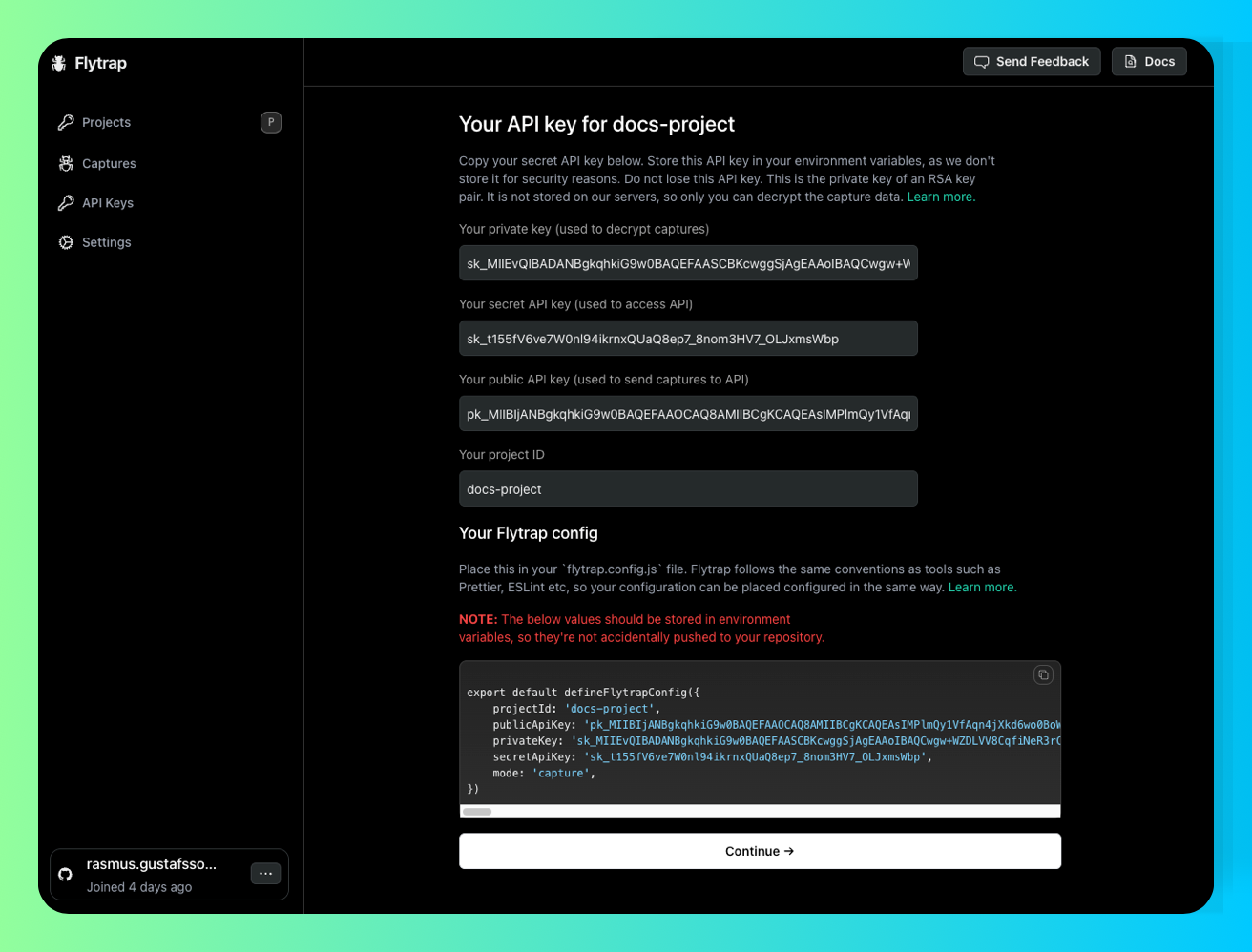
Next up, create your Flytrap configuration file. The configuration file defines what project you are capturing & replaying for, and the replay & capture behavior.
You can get the values for your Flytrap configuration file by creating a project as seen below.
import { defineFlytrapConfig } from 'useflytrap'
export default defineFlytrapConfig({
projectId: 'your-project-id',
captureId: 'capture id for replaying',
publicApiKey: 'your public api key',
secretApiKey: 'your secret api key',
privateKey: 'your private key',
mode: 'capture'
})
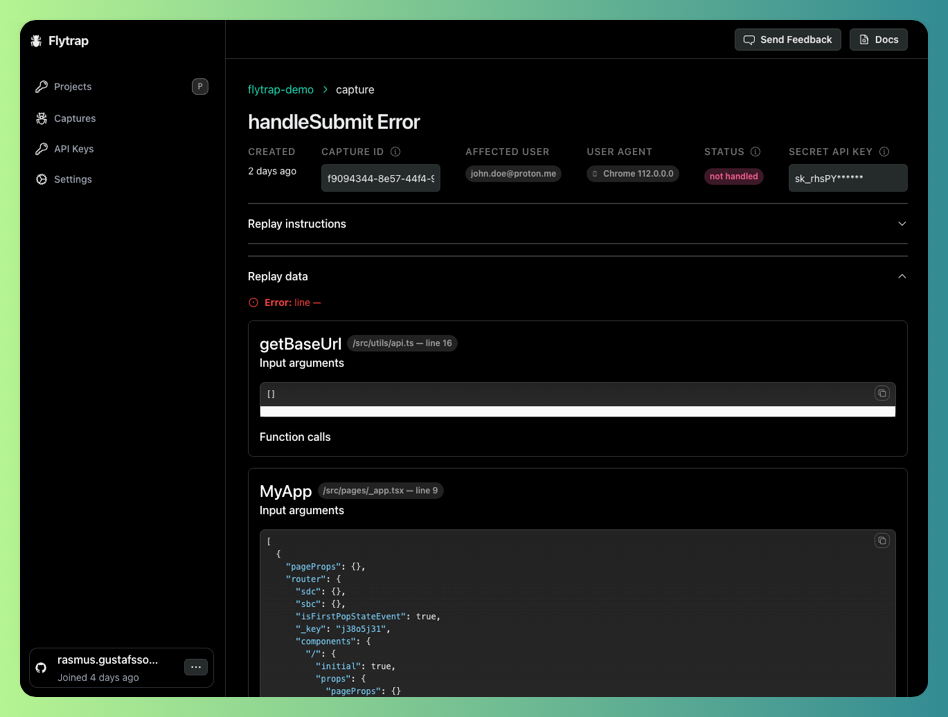
Catch your first bug
Now your app will be enabled with Flytrap. You can test out the setup by throwing an error in your development environment.